Switches & Switch Signs: Difference between revisions
m Link tweaks |
Marked this version for translation |
||
| Line 18: | Line 18: | ||
Navigational sign is located on the switch itself. It shows a diagonal white line on a red background, indicating the direction the switch is set to. Changing the switch will move the sign to point in a different direction, along with the track alignment. | Navigational sign is located on the switch itself. It shows a diagonal white line on a red background, indicating the direction the switch is set to. Changing the switch will move the sign to point in a different direction, along with the track alignment. | ||
<!--T:7--> | |||
When operating long trains in reverse, {{pll|Distance Tracker|distance tracker}} can be very useful to navigate switches. | When operating long trains in reverse, {{pll|Distance Tracker|distance tracker}} can be very useful to navigate switches. | ||
</translate> | </translate> | ||
[[Category:Infrastructure|5]] | [[Category:Infrastructure|5]] | ||
Revision as of 01:36, 7 March 2025
Switches are moveable pieces of track designed to steer rail vehicles in one of two possible directions. Depending on the session difficulty settings, switches can be operated in many ways:
- Using Comms radio on the switch
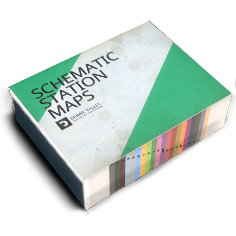
- Using station and route schematic maps with the Dispatcher license
- Using Switch setter gadget
- Using mouse cursor in mouse mode
- By manually interacting with the switch lever
There are two types of signs associated with switches: announcing and navigational one.
Announcing sign has a red “Y” shape on a white background, indicating an upcoming switch ahead and the end of the current speed limit section. It has a white appendix sign underneath, indicating the distance remaining to the switch, in kilometers. For example, a distance of 400m would be marked as "0.4".
Navigational sign is located on the switch itself. It shows a diagonal white line on a red background, indicating the direction the switch is set to. Changing the switch will move the sign to point in a different direction, along with the track alignment.
When operating long trains in reverse, distance tracker can be very useful to navigate switches.